Event recap
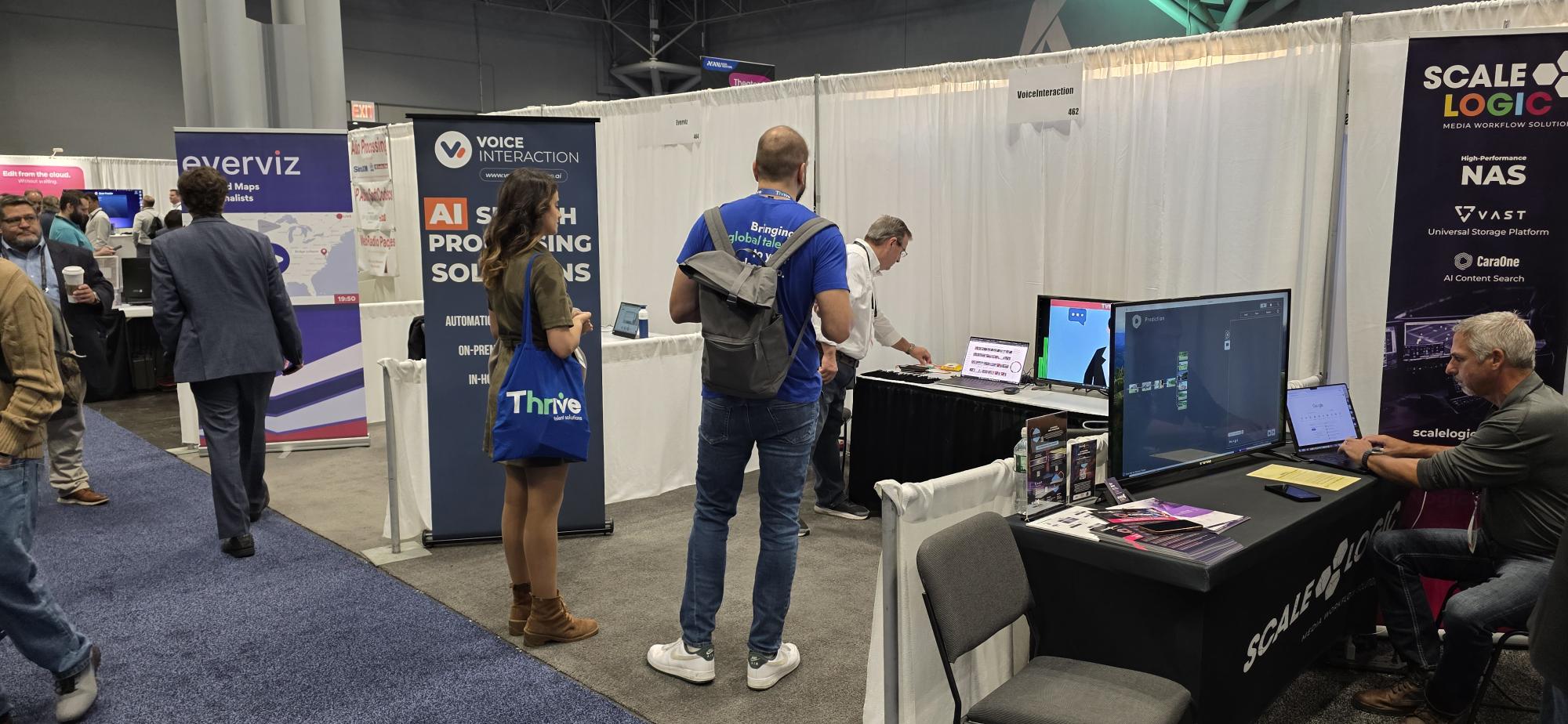
NAB Show New York
NAB Show New York 2025: Speech Technology and the Future of Newsroom Workflows
NAB Show New York 2025 highlighted the growing pressure on broadcasters to deliver content across more platforms while maintaining editorial quality and operational efficiency. As news organizations expand beyond traditional television distribution, speech technologies are emerging as valuable tools for accelerating content workflows, improving discoverability, and supporting digital publishing. Throughout the event, conversations focused on how automation can help newsrooms do more with existing resources while reaching audiences wherever they consume content.

By
EVENT INFORMATION
Event
Location
Industry
Date
TOPICS COVERED
FROM THE EVENT
Overview
NAB Show New York continues to serve as a key meeting point for broadcasters, station groups, news organizations, and media professionals focused on the evolving challenges of content production and audience engagement.
This year's event reflected a clear shift in newsroom priorities. Broadcasters are no longer producing content exclusively for linear television. Today's news organizations must simultaneously support websites, mobile platforms, social media channels, streaming services, and FAST channels, often with the same editorial teams and resources.
As a result, operational efficiency has become a strategic priority.
Many discussions throughout NAB Show New York 2025 focused on how speech technologies, automation, and AI-powered workflows can help bridge the gap between live production and digital distribution. Broadcasters are increasingly exploring ways to transform spoken content into structured information that supports faster publishing, improved content discovery, and more efficient newsroom operations.
For VoiceInteraction, these conversations reinforced the growing importance of speech-driven workflows that help news organizations maximize the value of the content they already produce.
Key themes
Newsrooms Are Becoming Multi-Platform Content Operations
The distinction between broadcast and digital publishing continues to disappear.
A single news story may now be distributed across traditional television broadcasts, websites, social media platforms, mobile applications, OTT services, and FAST channels. Broadcasters are looking for workflows that allow content to move efficiently between these environments without increasing operational complexity.
Speech Data Is Becoming Editorial Metadata
Every news program contains valuable spoken information.
Captions and transcripts are increasingly being used not only for accessibility, but also as sources of metadata that support content discovery, search, categorization, and publishing workflows.
By transforming speech into structured information, broadcasters can improve how content is organized, located, and reused across multiple platforms.
Faster Publishing Is Becoming a Competitive Advantage
Audiences increasingly expect content to be available online immediately.
Many broadcasters are exploring ways to automate parts of the publishing process, including clipping, transcription, metadata generation, and content preparation.
Reducing the time between broadcast and digital publication allows organizations to extend the reach of their journalism while improving audience engagement.
Archives Are Emerging as Valuable Content Resources
News organizations possess extensive archives containing years of reporting, interviews, and historical footage.
Advances in speech recognition and transcription technologies are helping broadcasters transform these archives into searchable and reusable assets, creating new opportunities for editorial reuse and digital publishing.
AI Is Supporting Journalists, Not Replacing Them
One of the most consistent themes throughout the event was the role of AI as an operational support tool.
Rather than replacing editorial teams, broadcasters are increasingly adopting technologies that automate repetitive tasks, improve information access, and streamline workflows. This allows journalists to spend more time on reporting, analysis, and storytelling.
The focus is shifting toward practical tools that enhance productivity while maintaining editorial control.
Looking ahead
NAB Show New York 2025 demonstrated that the future of local and regional broadcasting is increasingly tied to workflow efficiency, content discoverability, and digital distribution.
As news organizations continue serving audiences across multiple platforms, speech technologies are becoming an important bridge between live production and digital publishing. Captions, transcripts, and speech-derived metadata are evolving from operational outputs into valuable content assets that support search, automation, and audience engagement.
For VoiceInteraction, the event reinforced a growing industry trend: broadcasters are looking beyond compliance and transcription alone, seeking solutions that help them create, organize, distribute, and monetize content more effectively.
Organizations that can efficiently transform spoken content into searchable, reusable, and publishable assets will be better positioned to meet audience expectations and maximize the value of every story they produce.
← Back to all events
CONTINUE READING
Related event insights
Explore more observations and takeaways from the events VoiceInteraction attends.







Turn event conversations into practical workflows
Speak with our team about the requirements, deployment context, and speech technology workflows behind this insight.