Event recap
SET Expo
SET Expo 2025: Broadcast Innovation, Compliance, and the Road to TV 3.0
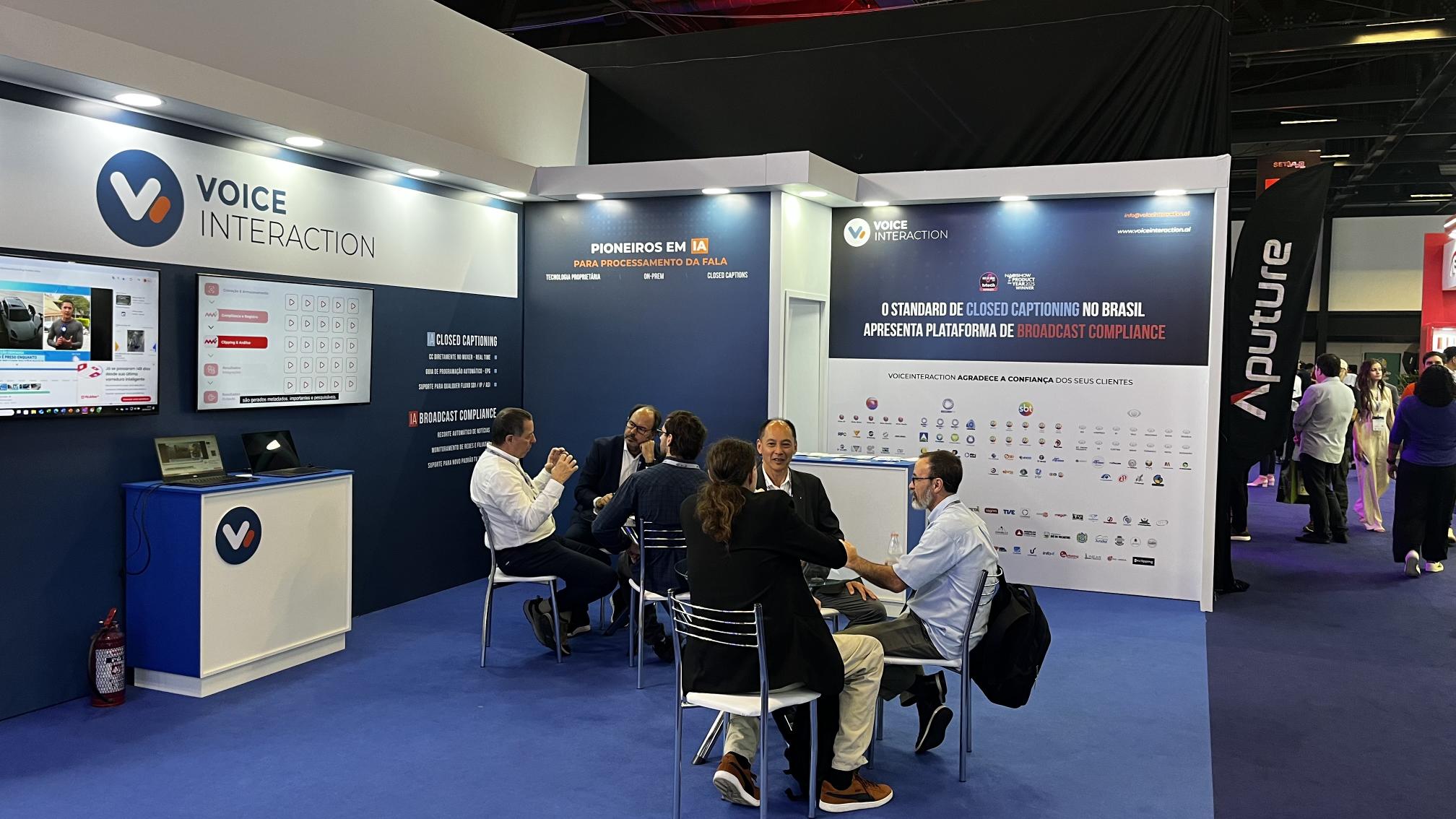
SET Expo 2025 brought together broadcasters, technology providers, and industry leaders from across Brazil and Latin America to discuss the future of broadcast operations. Conversations throughout the event reflected a market balancing strict regulatory requirements with the opportunities created by AI, content automation, and the transition toward TV 3.0. For VoiceInteraction, the event reinforced the importance of speech technologies in supporting accessibility, compliance, media monitoring, and the next generation of broadcast services.

By
VoiceInteraction Team
EVENT INFORMATION
Event
Location
Industry
Date
TOPICS COVERED
FROM THE EVENT
Overview
As Brazil's leading broadcast and media technology event, SET Expo continues to be one of the most important forums for discussing the future of television, radio, and digital media in Latin America.
This year's event highlighted both the operational realities facing broadcasters today and the opportunities emerging through new technologies. Broadcasters remain focused on delivering reliable closed captioning, ensuring regulatory compliance, and maintaining visibility across increasingly fragmented media environments. At the same time, discussions are increasingly shifting toward automation, artificial intelligence, content discoverability, and audience engagement.
VoiceInteraction met with broadcasters, media groups, and technology partners to discuss how speech technology can support these evolving requirements. Conversations focused on real-time captioning, media monitoring, automated transcription, multilingual workflows, and content intelligence solutions capable of supporting both current operations and future TV 3.0 services.
The Brazilian market continues to stand out for its scale, competitiveness, and commitment to accessibility. As organizations prepare for the next generation of television services, speech technology is becoming an increasingly important foundation for both compliance and innovation.
Key themes
Closed Captioning Remains Mission Critical
Accessibility and regulatory compliance remain top priorities for broadcasters across Brazil. Reliable, low-latency captioning continues to be a critical operational requirement, particularly for live programming where quality and synchronization directly impact viewer experience.
Broadcasters are increasingly looking for solutions that combine accuracy, operational resilience, and flexibility across both traditional and IP-based workflows.
Monitoring Content Across Multiple Markets
As media organizations operate across multiple channels, regions, and digital platforms, monitoring requirements continue to expand. Broadcasters are seeking better visibility into their own content as well as competitor activity, advertising exposure, news coverage, and audience-facing communications.
Automated speech recognition and AI-driven monitoring technologies are increasingly helping organizations transform large volumes of audio and video into searchable, actionable intelligence.
Content Repurposing and Operational Efficiency
Many broadcasters are exploring how speech-derived metadata can support faster content production and digital publishing workflows. Automated clipping, transcription, metadata generation, and archive search capabilities were recurring topics throughout the event.
Organizations are looking to maximize the value of content already being produced while reducing manual workload across production teams.
Preparing for TV 3.0
The transition toward TV 3.0 generated significant interest throughout SET Expo 2025. Broadcasters are evaluating how new interactive capabilities, personalized experiences, hybrid delivery models, and enhanced digital services will impact their operations.
Speech technology is expected to play an important role in this transition by enabling richer metadata generation, multilingual content experiences, improved discoverability, accessibility services, and new forms of audience interaction.
Artificial Intelligence Moves into Production Workflows
AI discussions at SET Expo have moved beyond experimentation. Broadcasters are increasingly evaluating practical use cases that deliver measurable operational value, including captioning, transcription, monitoring, metadata enrichment, archive management, and content automation.
The focus is shifting from whether AI should be adopted to how it can be integrated effectively into existing workflows.
Looking ahead
SET Expo 2025 confirmed that Brazilian broadcasters are preparing for a future where accessibility, compliance, automation, and digital services become increasingly interconnected.
The transition to TV 3.0 represents more than a technology upgrade—it creates an opportunity to rethink how content is produced, distributed, discovered, and monetized. Speech technologies are positioned to support this evolution by transforming spoken content into structured data that can power accessibility services, content intelligence, automated workflows, and new audience experiences.
For VoiceInteraction, the event reinforced the importance of continuing to invest in low-latency captioning, media monitoring, transcription automation, and AI-powered content workflows tailored to the realities of the Brazilian market.
As broadcasters prepare for the next generation of television, speech technology will continue to play a central role in helping organizations meet regulatory requirements while unlocking new operational and commercial opportunities.
← Back to all events
CONTINUE READING
Related event insights
Explore more observations and takeaways from the events VoiceInteraction attends.


Turn event conversations into practical workflows
Speak with our team about the requirements, deployment context, and speech technology workflows behind this insight.