Event recap
BroadcastAsia
BroadcastAsia 2026: Accelerating the Broadcast-to-Digital Workflow
BroadcastAsia 2026 highlighted a challenge familiar to broadcasters across the Asia-Pacific region: how to transform live content into digital assets quickly enough to meet modern audience expectations. As newsrooms and content teams face increasing pressure to publish across websites, social media, OTT platforms, and mobile channels, broadcasters are looking for technologies that reduce manual effort and accelerate digital distribution. Conversations throughout the event reinforced the growing role of speech technologies in content repurposing, automated clipping, and digital publishing workflows.

By
VoiceInteraction Team
EVENT INFORMATION
Event
Location
Industry
Date
TOPICS COVERED
FROM THE EVENT
Overview
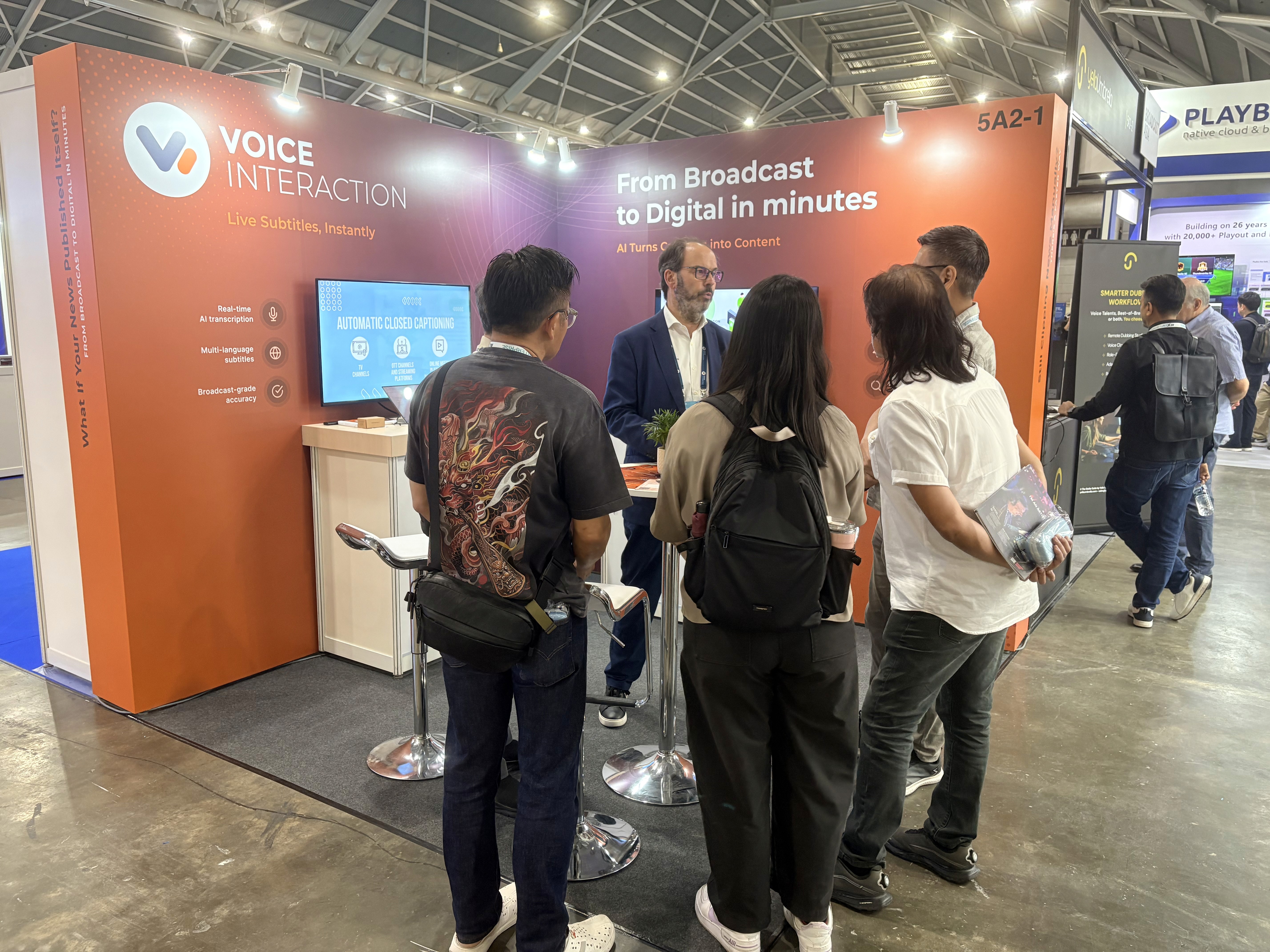
BroadcastAsia 2026 once again brought together broadcasters, media organizations, technology providers, and digital media leaders from across the APAC region to discuss the future of content creation, distribution, and audience engagement.
While accessibility, cloud infrastructure, and AI remained important topics, one of the most consistent themes was the growing need to bridge traditional broadcast operations with digital publishing requirements.
Broadcasters today are expected to deliver content across an expanding range of platforms. A single news bulletin may generate dozens of stories, clips, social media posts, and on-demand assets. Yet many organizations continue to rely on highly manual workflows to identify segments, create clips, generate descriptions, and prepare content for publication.
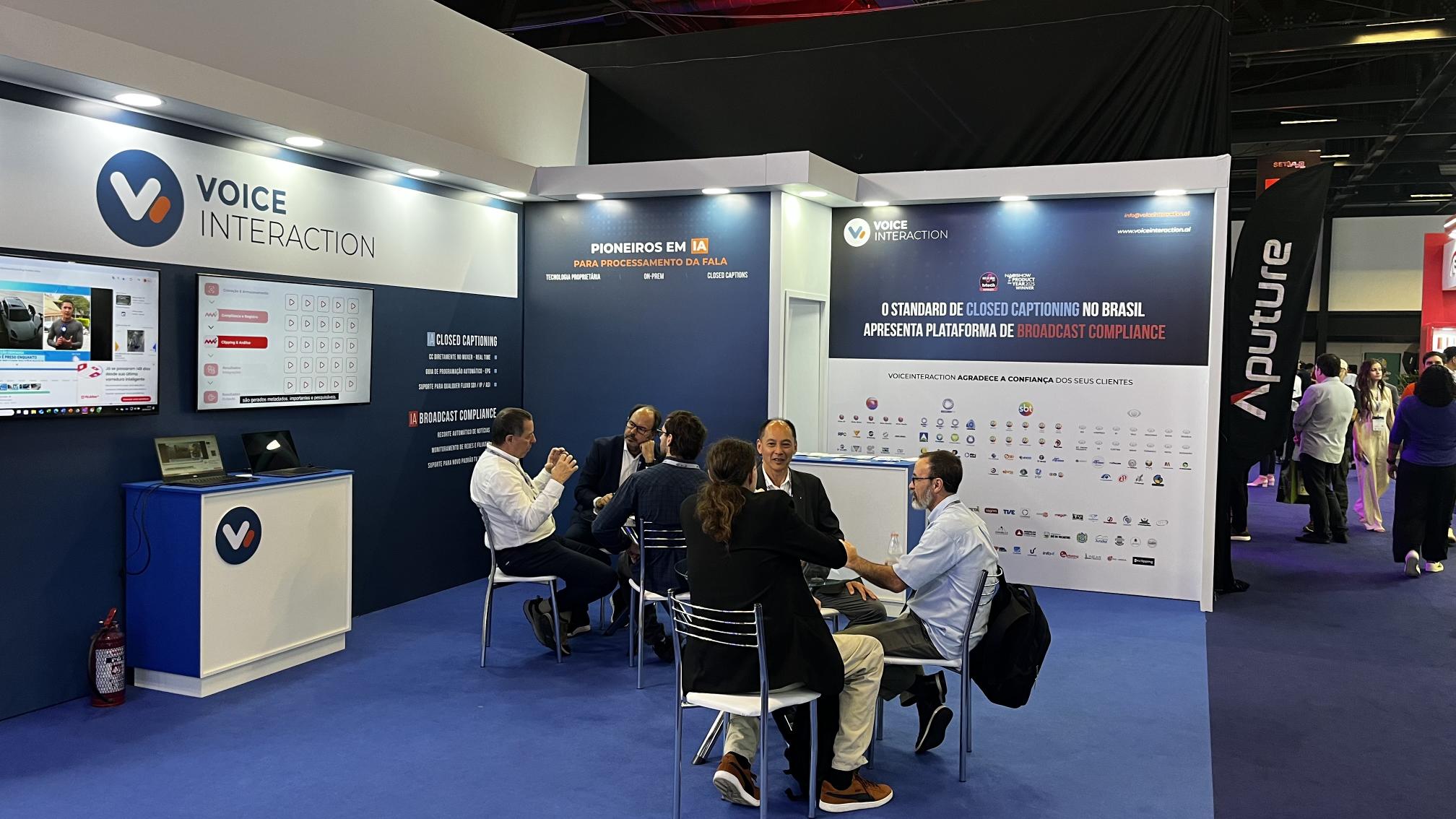
At BroadcastAsia 2026, VoiceInteraction highlighted how speech technologies can help solve this challenge by transforming spoken content into structured information that supports content discovery, automated clipping, metadata generation, and digital publishing.
Discussions also reflected growing interest in real-world deployments such as SmartCut, developed in collaboration with CNA, which demonstrates how AI-powered speech technologies can help journalists accelerate content preparation while maintaining editorial control.
Key themes
The Broadcast-to-Digital Gap
Many broadcasters continue to face a disconnect between live production and digital publishing.
Content is created in real time, but preparing it for websites, social platforms, OTT services, and mobile applications often requires extensive manual effort. Broadcasters are actively seeking solutions that reduce this gap and allow content to move more efficiently across platforms.
Speech as a Source of Editorial Metadata
Every broadcast already contains valuable information about topics, people, locations, and events.
By converting speech into structured metadata, broadcasters can automatically identify stories, segment programs, generate searchable archives, and support faster editorial workflows.
Speech data is increasingly becoming a foundation for digital content operations.
Automated Clipping and Story Extraction
One of the most discussed applications at BroadcastAsia 2026 was the automation of clipping workflows.
News organizations want to reduce the time required to identify stories within longer programs and prepare them for publication. AI-driven speech analysis enables automatic story segmentation, clip creation, and metadata enrichment, significantly reducing manual workload.
Supporting Journalists Through Workflow Automation
The focus of automation discussions was not replacing editorial teams but helping them work more efficiently.
Broadcasters are looking for technologies that eliminate repetitive tasks while preserving editorial oversight. Automating clipping, transcription, metadata generation, and content preparation allows journalists to spend more time on reporting, storytelling, and audience engagement.
Maximizing the Value of Existing Content
Broadcasters produce vast amounts of content every day, much of which remains underutilized after its initial broadcast.
Speech technologies help unlock additional value by making content searchable, discoverable, and reusable across digital channels. This enables organizations to extend the lifespan of their content and increase return on production investments.
Expanding Reach Through Multilingual Content
Across the APAC region, broadcasters serve diverse audiences that often consume content in multiple languages. As content distribution expands across digital channels, organizations are increasingly exploring multilingual captioning and translation workflows to improve accessibility and reach wider audiences.
Speech technologies can help automate subtitle generation, translation, and multilingual publishing workflows, enabling broadcasters to repurpose content for new markets while reducing manual effort and turnaround times.
Looking ahead
BroadcastAsia 2026 confirmed that content repurposing is becoming a strategic priority for broadcasters across the APAC region.
As audiences increasingly consume content through digital platforms, organizations need workflows capable of transforming live broadcasts into publishable digital assets at speed and scale. Speech technologies are playing an increasingly important role in this transition by converting spoken content into metadata, clips, summaries, and searchable archives.
For VoiceInteraction, the event reinforced the growing demand for solutions that help broadcasters accelerate the journey from live production to digital distribution. Projects such as SmartCut demonstrate how AI-powered speech technologies can support newsroom efficiency while maintaining the editorial standards that remain at the heart of quality journalism.
Another recurring theme was the growing importance of multilingual content workflows. As broadcasters seek to expand audience reach across diverse linguistic markets, technologies such as automatic translation, multilingual captioning, and speech-driven localization are becoming increasingly relevant. What was once primarily an accessibility requirement is now becoming a key enabler of content repurposing and international distribution. The broadcasters that succeed in the coming years will be those that can efficiently transform every broadcast into searchable, reusable, and multilingual digital content, maximizing both audience reach and content value across platforms and markets.
← Back to all events
CONTINUE READING
Related event insights
Explore more observations and takeaways from the events VoiceInteraction attends.




Turn event conversations into practical workflows
Speak with our team about the requirements, deployment context, and speech technology workflows behind this insight.