Event recap
ISE
ISE 2026: Speech Technology Conversations from the AV Industry
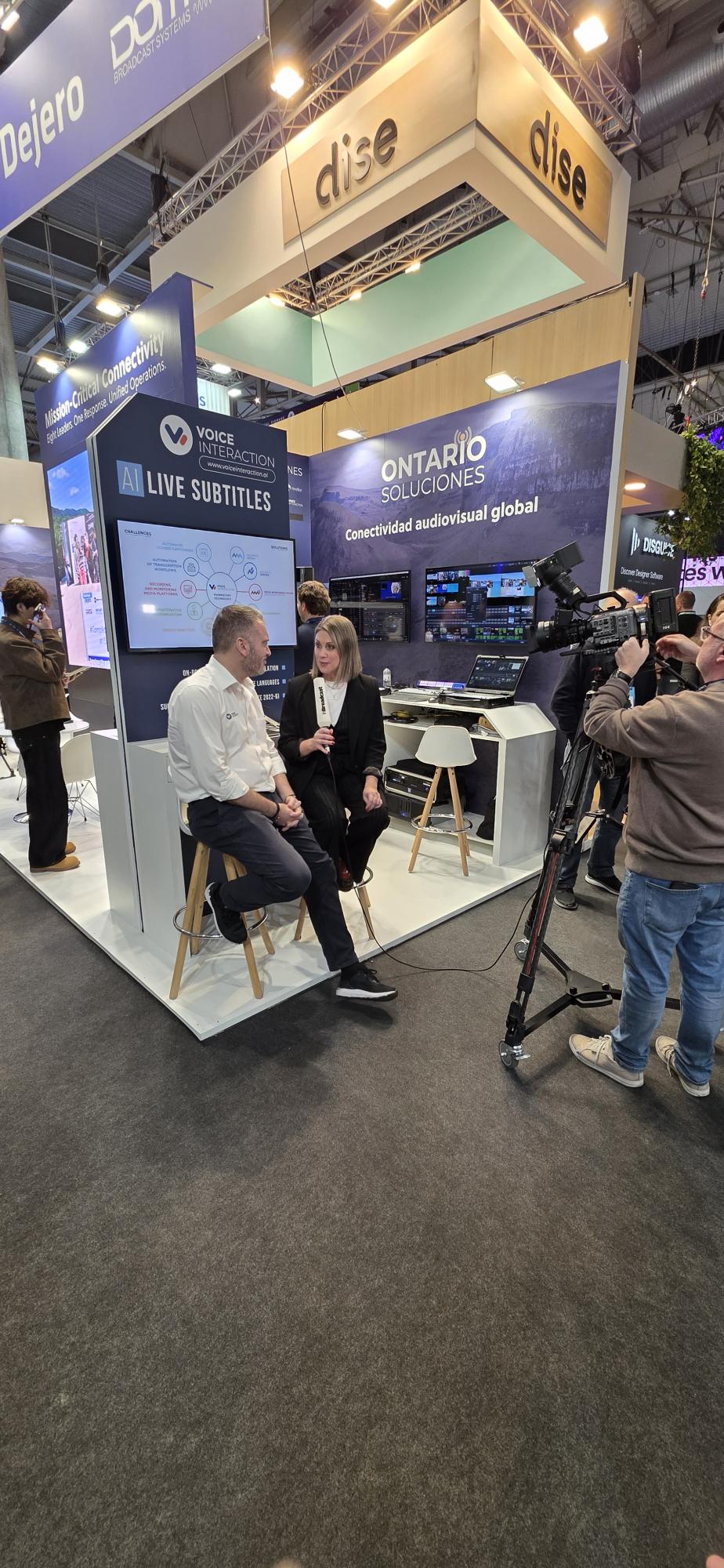
At ISE 2026 in Barcelona, VoiceInteraction joined its integration partner Ontario Soluciones to showcase speech technology solutions for the professional AV market. Throughout the event, conversations focused on how organizations can use automatic transcription, live captioning, and speech-driven content workflows to improve accessibility, operational efficiency, and information management across corporate, educational, institutional, and public-sector environments.

By
EVENT INFORMATION
Event
Location
Industry
Date
TOPICS COVERED
FROM THE EVENT
Overview
Integrated Systems Europe (ISE) continues to be one of the most important meeting points for the professional AV industry, bringing together systems integrators, technology vendors, consultants, and end users from across Europe and beyond.
Together with our partner Ontario Soluciones, VoiceInteraction used ISE 2026 as an opportunity to discuss how speech technologies are increasingly becoming part of modern AV workflows. While many conversations traditionally focus on displays, conferencing platforms, and collaboration tools, there is growing recognition that spoken information itself is a valuable operational asset.
Visitors showed particular interest in solutions that can automatically transform meetings, conferences, lectures, presentations, and institutional sessions into searchable, reusable content. As organizations continue to adopt hybrid working models and digital-first communication strategies, transcription and accessibility requirements are becoming increasingly important components of AV deployments.
At the event, VoiceInteraction highlighted Audimus.Server and Calligraphus for large-scale transcription and meeting documentation workflows, while also demonstrating how Audimus.Media supports real-time captioning and accessibility in live environments.
Across customer meetings and partner discussions, a common theme emerged: organizations are no longer looking at speech technology as an isolated feature, but as a core component of collaboration, accessibility, and knowledge management strategies.
Key themes
Automated transcription as a productivity tool
Organizations across enterprise, education, and public-sector markets are looking for ways to automatically document meetings, conferences, hearings, lectures, and operational discussions. Automated transcription is increasingly viewed as a productivity tool that reduces administrative effort while improving access to information.
Accessibility becoming a standard requirement
Live captioning is no longer limited to regulatory compliance. Many organizations now consider accessibility an essential part of delivering inclusive communication experiences for employees, students, customers, and citizens.
Searchable organizational knowledge
Many discussions focused on how transcription enables organizations to create searchable repositories of spoken information, making meetings, presentations, and events easier to discover and reuse.
Integration with existing AV ecosystems
Customers increasingly expect speech technologies to integrate seamlessly with conferencing platforms, recording systems, collaboration tools, and content management environments. Ease of deployment and interoperability remain key purchasing criteria.
Multilingual communication
As organizations operate across multiple regions and languages, interest continues to grow in multilingual transcription, captioning, and translation capabilities that help content reach broader audiences.
Looking ahead
ISE 2026 reinforced a clear trend: speech technology is becoming an increasingly important layer within modern AV environments.
Organizations are looking beyond simple recording and conferencing capabilities and are seeking solutions that transform spoken content into accessible, searchable, and actionable information. Automated transcription, live captioning, and content intelligence are becoming valuable extensions of existing AV investments.
For VoiceInteraction, the event confirmed growing demand for solutions such as Audimus.Server, Calligraphus, and Audimus.Media, particularly in environments where accessibility, operational efficiency, and knowledge management intersect.
As we continue working with partners such as Ontario Soluciones, we look forward to helping organizations integrate speech technologies into the next generation of collaboration, communication, and AV workflows.
← Back to all events
CONTINUE READING
Related event insights
Explore more observations and takeaways from the events VoiceInteraction attends.


Turn event conversations into practical workflows
Speak with our team about the requirements, deployment context, and speech technology workflows behind this insight.