
Event recap
TAB Show
TAB Show 2026: Operational AI has to work on air
At TAB Show 2026, the focus was not AI in the abstract, but how it performs in real broadcast operations. For local stations, reliability, control and integration remain the measures that turn speech technology into dependable infrastructure.

By
VoiceInteraction Team
EVENT INFORMATION
Event
Location
Industry
Date
TOPICS COVERED
FROM THE EVENT
Overview
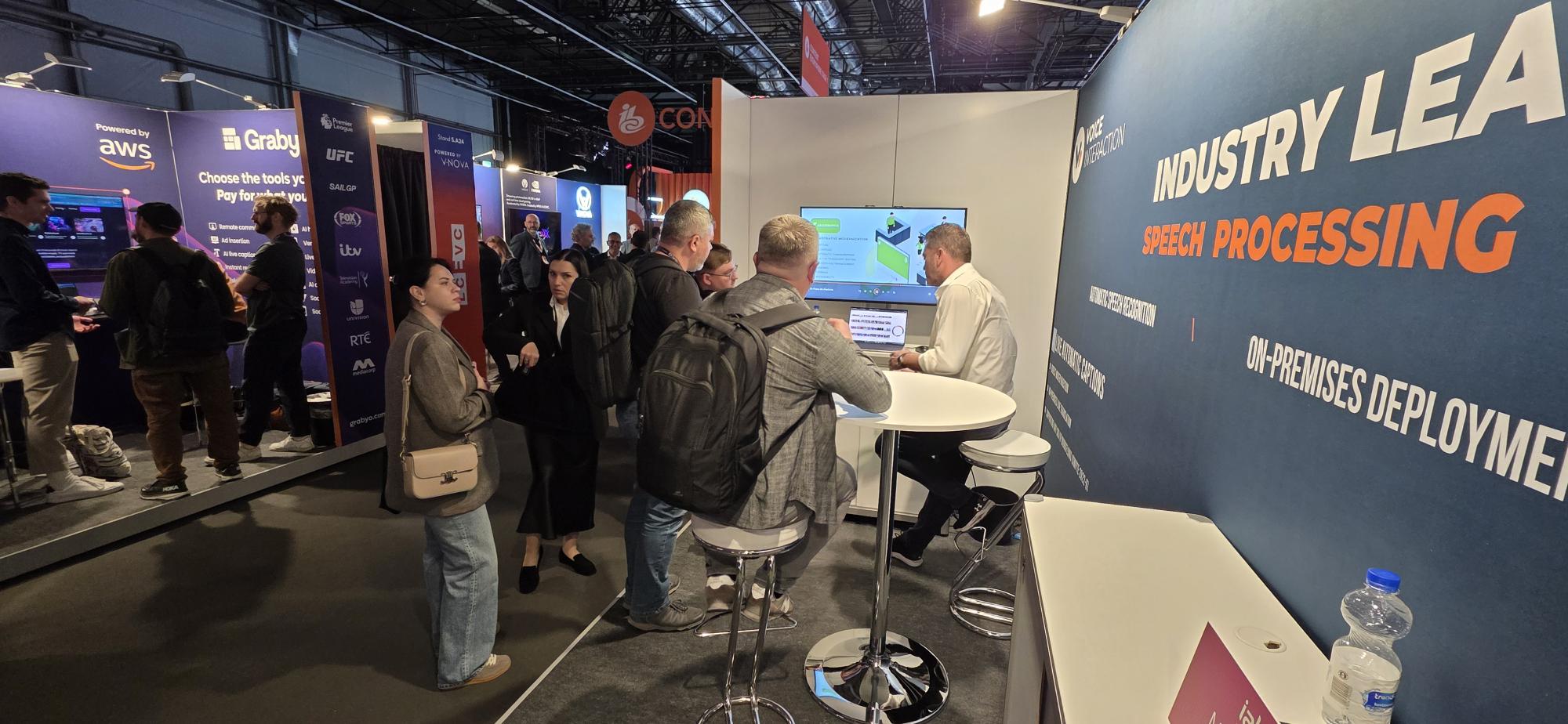
At the Texas Association of Broadcasters Show 2026 in Round Rock, VoiceInteraction joined radio and television professionals from across Texas and the wider United States for two days focused on the practical future of broadcasting.
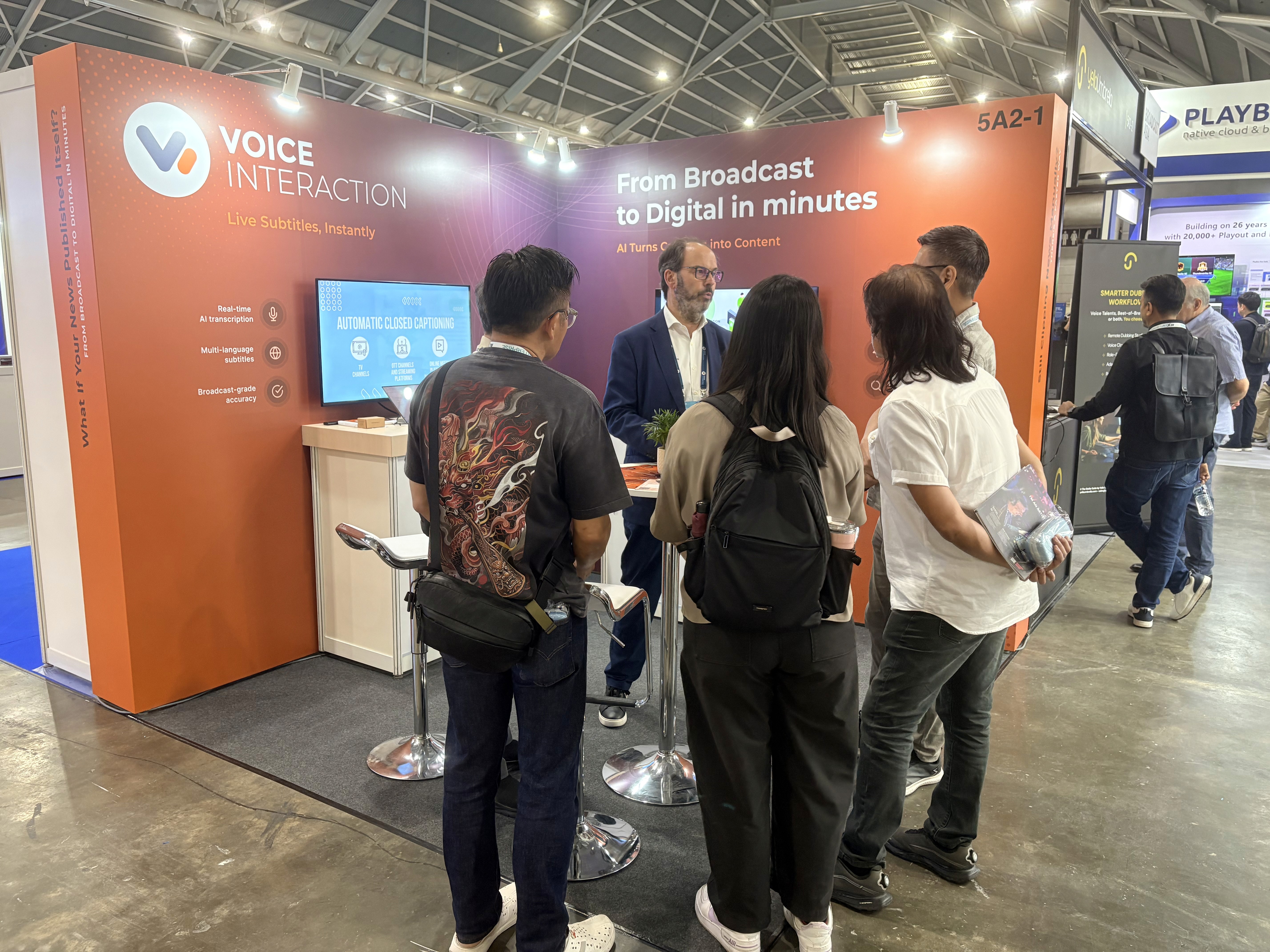
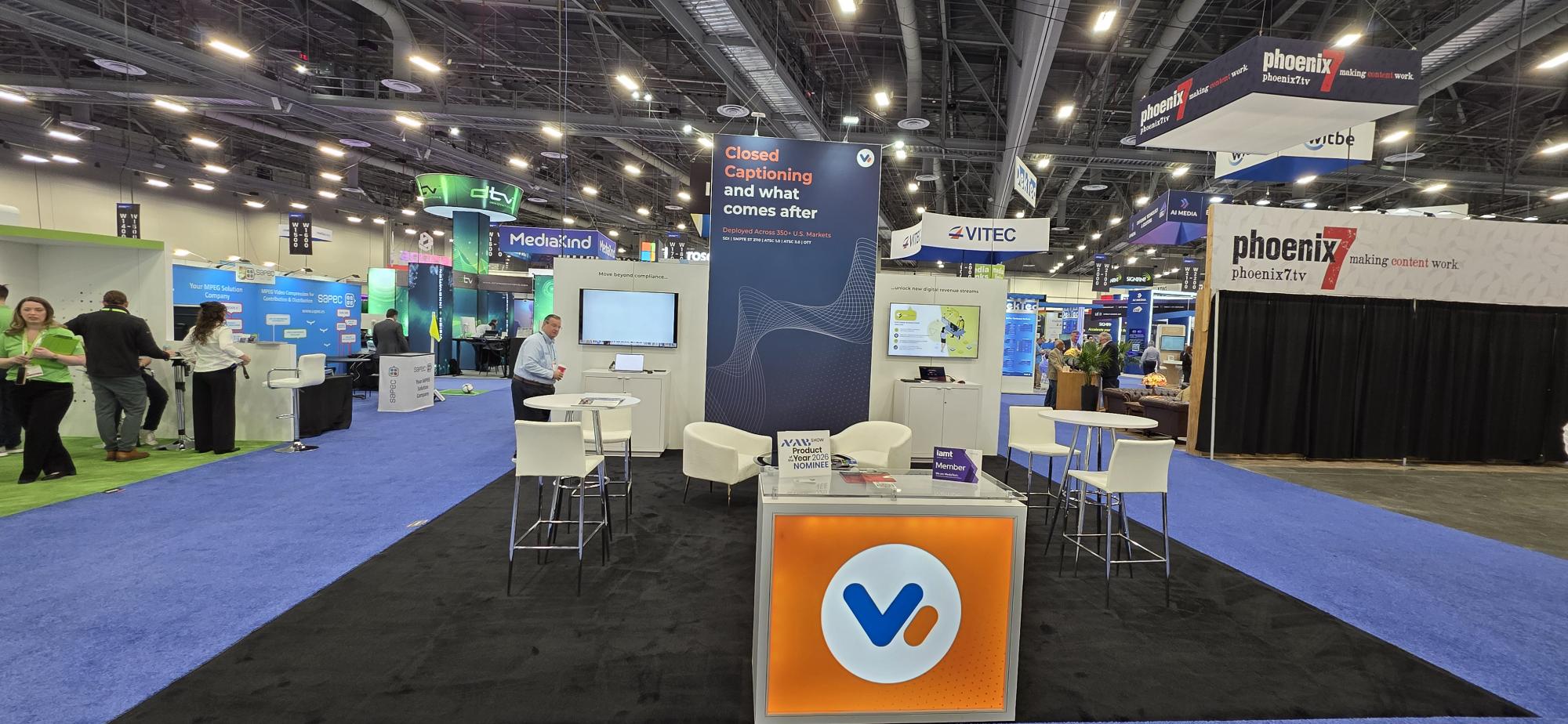
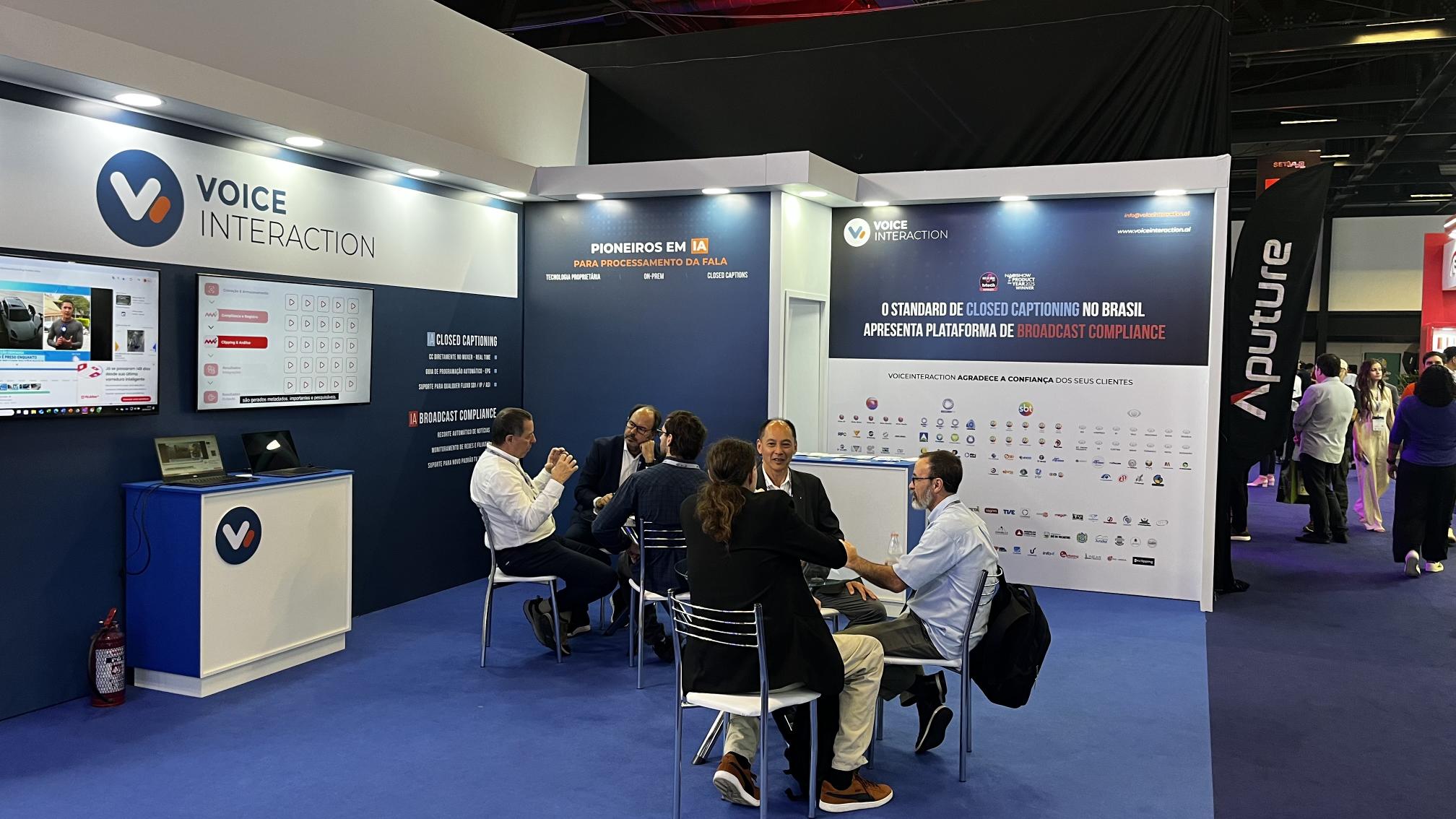
As a first-time exhibitor at Booth 516, we presented how live closed captioning, monitoring and transcription can support the everyday demands of local broadcast operations. These are environments in which technology is judged not only by what it can generate, but by how consistently it performs when the output is live, public and operationally important.
That practical perspective was reflected throughout the event. Sessions explored real-world applications of AI, infrastructure resilience, NextGen TV, hybrid distribution and the growing need to serve audiences across broadcast and digital channels. Together, these priorities highlighted a central question for the industry: how can broadcasters modernise their workflows without compromising the reliability on which their audiences depend?
Key themes
Broadcast AI must earn operational trust
AI is now present across many parts of the media workflow, but broadcasting sets a demanding standard for its use. A successful demonstration is not the same as dependable performance inside a live production environment.
Live captioning makes that distinction particularly clear. Captions must be generated quickly enough to follow the programme, accurately enough to serve the audience and consistently enough to support continuous broadcasting. The output also needs to fit the station’s existing technical environment and remain visible to the teams responsible for keeping it on air.
Audimus.Media is designed for this operational context, supporting real-time captioning for live broadcast and streaming workflows. The value lies not simply in generating text from speech, but in making speech recognition usable within a controlled, repeatable broadcast process.
For local broadcasters working with limited technical resources, this distinction matters. Operational AI should reduce complexity for station teams, not introduce another system that requires constant intervention.
Reliability extends beyond the caption output
The TAB Show programme placed strong emphasis on resilient infrastructure, from transmission and tower maintenance to emergency readiness and hybrid distribution. For broadcasters, reliability is not an isolated product characteristic; it is a requirement that extends across the complete delivery chain.
The same principle applies to accessibility. Caption quality matters, but stations also need to understand what was transmitted, identify potential issues and maintain an operational record of their output.
VoiceInteraction’s Media Monitoring System supports this wider requirement by bringing monitoring, caption logging, compliance review and archive access into the workflow. This gives broadcast teams greater visibility after the caption has been generated and helps connect live accessibility with the operational processes that surround it.
For local news, severe-weather coverage, sports and community programming, dependable workflows are especially important. These are precisely the moments when audiences rely most heavily on their local stations and when live content is least predictable.
One broadcast can support more than one output
TAB Show 2026 also reflected the continued expansion of broadcasting beyond the traditional over-the-air signal. Streaming, digital publishing, podcasting, audience data and new distribution models featured across the programme.
This shift changes the potential value of speech recognition. A live caption can serve an immediate accessibility need, but the underlying transcript can also become the starting point for other workflows. Spoken content can be reviewed, searched, translated, archived or prepared for distribution through additional channels.
Audimus.Server extends this foundation to recorded media, supporting the creation of transcripts, captions, subtitles and searchable content from audio and video. Instead of processing the same programme independently for every destination, broadcasters can use structured speech data to support more connected live and recorded workflows.
For local stations, this does not need to mean a large transformation project. It can begin with a clear operational need—such as live captioning—and expand where transcription, search or content reuse provides practical value.
Looking ahead
TAB Show 2026 reinforced that broadcast modernisation is not defined by adopting the largest number of AI tools. It is defined by choosing technology that can perform reliably, integrate with existing operations and solve problems that matter to station teams and their audiences.
Live captioning is an important part of that transition because it brings accessibility, operational reliability and future content use into the same conversation. When speech recognition is treated as dependable infrastructure rather than an isolated output, it can support both the immediate responsibility of serving viewers and the longer-term need to make broadcast content easier to monitor, find and reuse.
For VoiceInteraction, the next step is to continue working with broadcasters on the practical requirements behind these workflows: the content they produce, the systems they operate, the level of control they need and the audiences they want to reach.
Explore how VoiceInteraction supports live captioning, monitoring, transcription and content reuse across broadcast and media workflows.
← Back to all events
CONTINUE READING
Related event insights
Explore more observations and takeaways from the events VoiceInteraction attends.


Turn event conversations into practical workflows
Speak with our team about the requirements, deployment context, and speech technology workflows behind this insight.