
Event recap
IBC
IBC 2026: Stable AI Workflows Need More Than Models
At IBC 2026, multilingual captioning showed why broadcast AI must be evaluated as a complete operational workflow—from latency and monitoring to integration, infrastructure control and the hardware needed to keep services running.

By
VoiceInteraction Team
EVENT INFORMATION
Event
Location
Industry
Date
TOPICS COVERED
FROM THE EVENT
Overview
At IBC 2026, the discussion around AI in broadcast moved beyond what a model can generate. The more important question was whether an AI-supported workflow can perform predictably inside the operational environment responsible for putting content on air and making it useful afterwards.
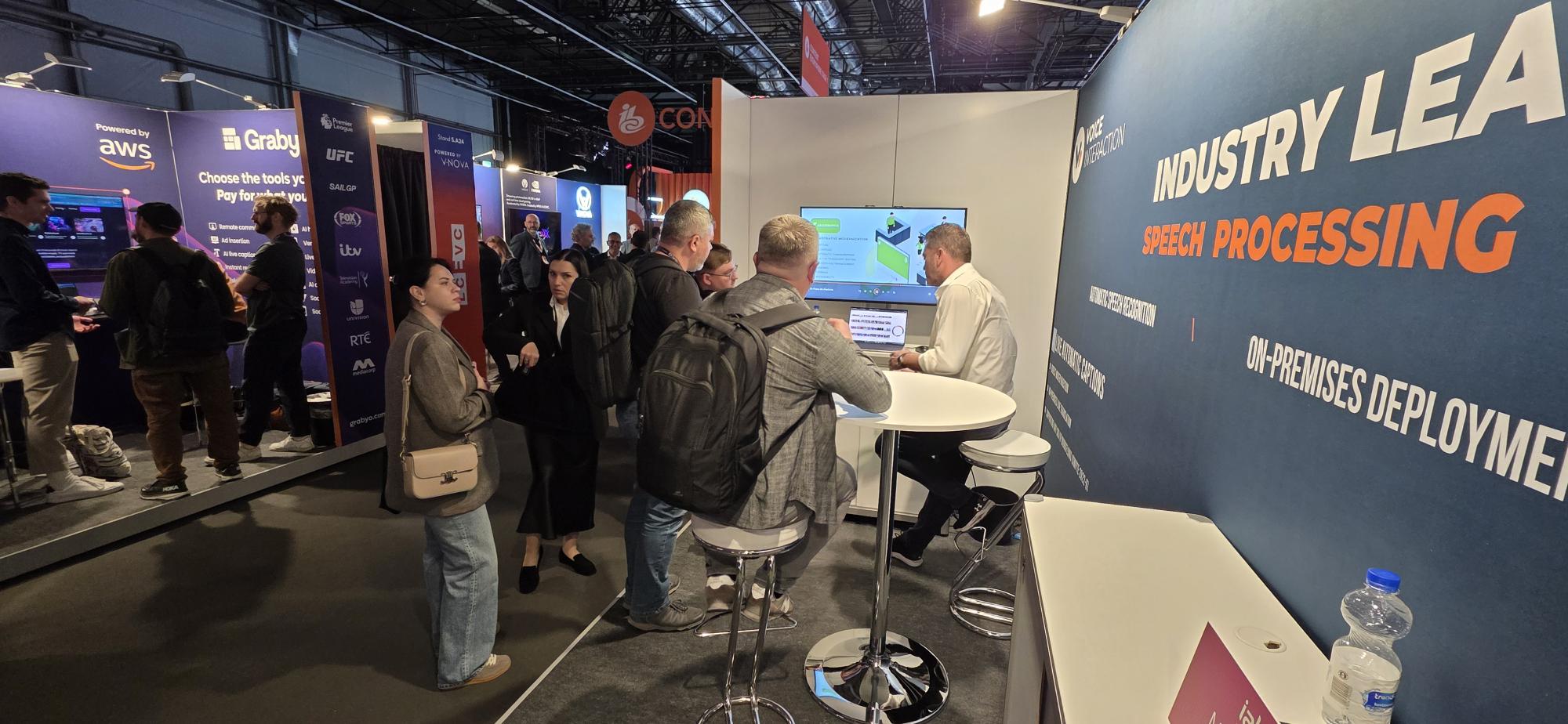
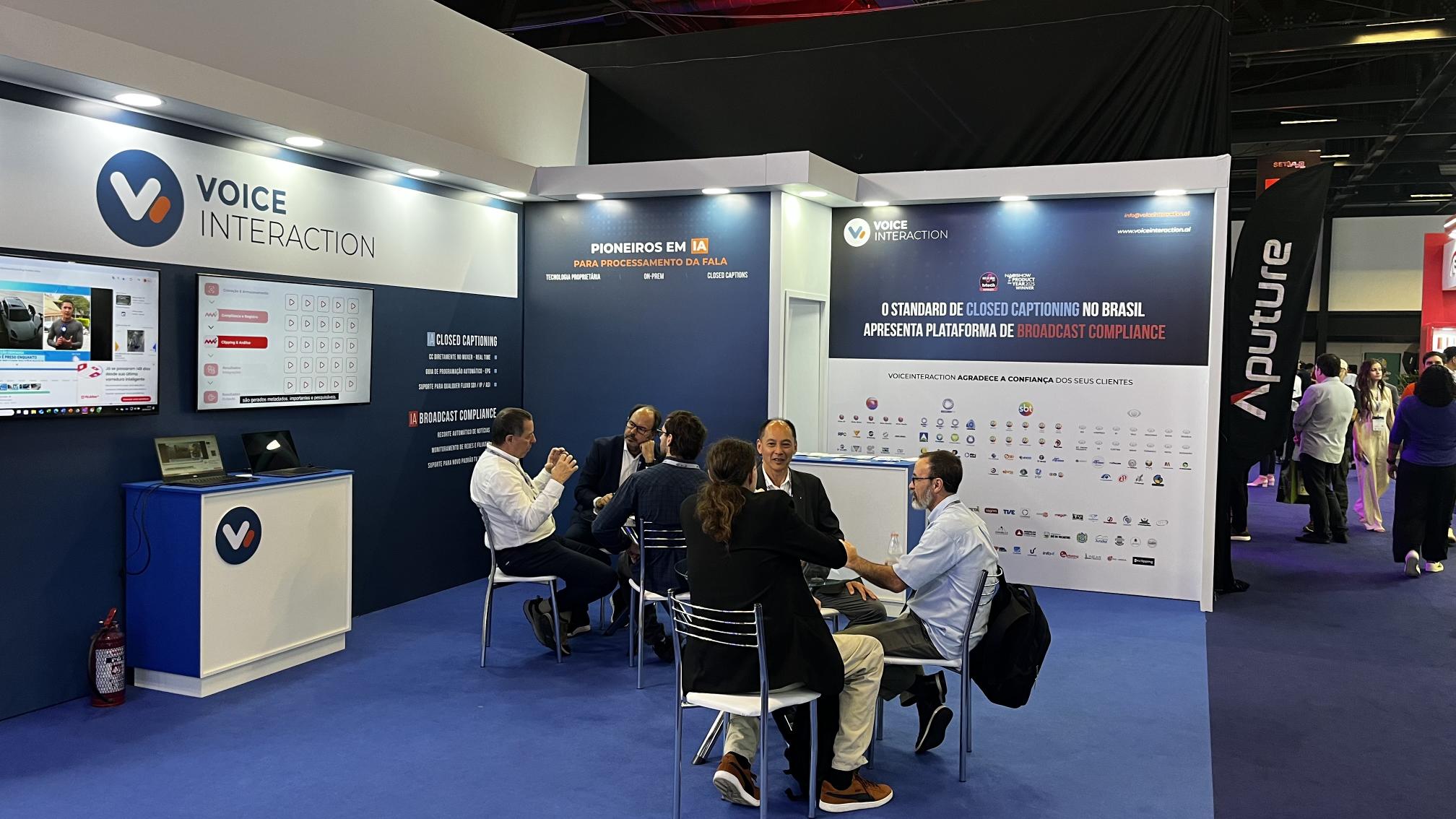
That shift was visible throughout VoiceInteraction’s participation in Amsterdam. From conversations at Hall 5, Stand 5.A39 and the Brazil Pavilion to the Content Everywhere stage, recurring concerns included multilingual captioning, workflow integration, operational stability and the availability of the GPU resources needed for an intended deployment.
These concerns point to a practical conclusion: broadcast readiness is not a model characteristic. It depends on how recognition, translation, monitoring, delivery, infrastructure and operational control work together.
Key themes
Multilingual sport tests the complete workflow
Live sport makes operational weaknesses visible quickly. Commentary moves fast, names and specialist vocabulary change by competition, captions must remain synchronised with the action, and multilingual output adds another time-sensitive stage before delivery.
On the IBC Content Everywhere Stage 1, João Neto presented “From Live Commentary to Multilingual Captions: A Broadcast-Ready Sports Workflow”. The presentation followed a content journey from source-language captions and live translation to recording, clipping and distribution across broadcast, streaming and digital channels.
The questions generated by the session reinforced the importance of multilingual captioning, but the opportunity cannot be separated from the workflow around it. Vocabulary configuration, latency, monitoring, output delivery and integration with professional infrastructure all influence whether the result is usable in a live environment.
Live captioning is part of the broadcast chain
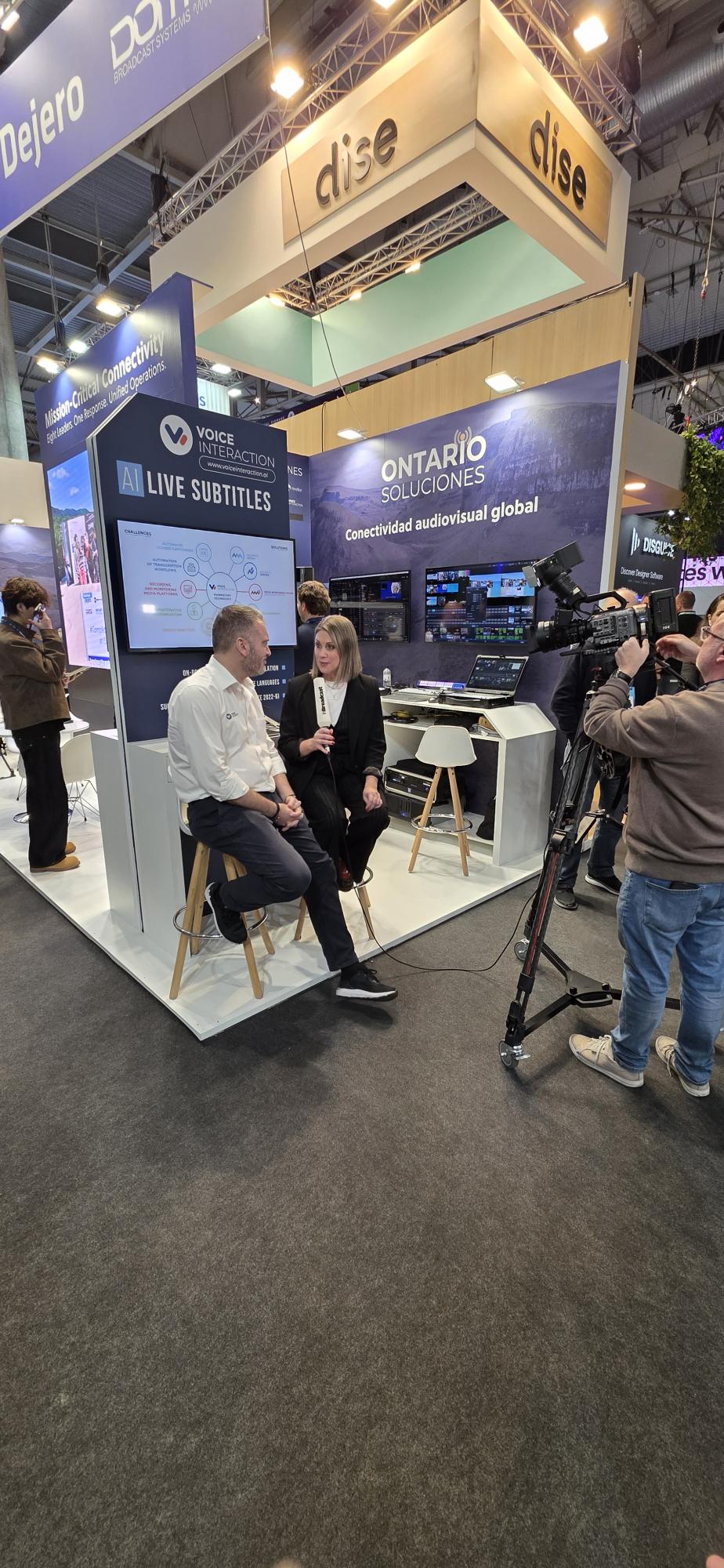
This operational perspective was also central to VoiceInteraction’s IBC 2026 interview with InBroadcast, “Live Captioning as Broadcast Infrastructure”.
The interview examines why captioning should not be treated as a standalone speech-to-text task. It connects live performance with continuity, infrastructure control and cost, and discusses customer-controlled captioning built on VoiceInteraction’s proprietary speech recognition. It also identifies a continuing engineering priority: improving processing efficiency while reducing hardware demands.
Watch the InBroadcast interview
Audimus.Media is designed for this live broadcast context. It combines real-time caption generation with scheduling, supervision, multilingual processing and delivery through configured professional outputs. Its role is not to remove the need for system design, but to provide the operational controls and integration points needed to make live captioning part of a managed broadcast service.
Infrastructure readiness includes hardware
Models are only one part of an AI deployment. Teams also need to know where processing will run, how core media paths remain under their control, what resources are available and how the service will be monitored.
At IBC, GPU availability arose in VoiceInteraction’s conversations as a concrete deployment concern. The InBroadcast discussion adds the related question of efficiency: how can captioning evolve while requiring fewer hardware resources? Together, these points make infrastructure planning part of workflow design rather than a purchasing detail considered at the end.
The answer will vary by organisation. Language coverage, concurrency, output configuration, latency targets, resilience and customer-controlled deployment requirements all affect the appropriate architecture. Hardware availability should therefore be assessed against the intended workflow, without assuming one configuration will suit every broadcaster.
The value of speech continues after transmission
A stable live workflow creates immediate value through accessible output, but the underlying spoken content can remain useful after a programme ends. The sports-workflow presentation connected live captions and translation with recording, search, clipping and distribution, while preserving the different requirements of each stage.
Media Monitoring System addresses the monitored-media part of that lifecycle by generating searchable transcripts and metadata across broadcast and recorded content. Teams can locate relevant segments, review them, create clips and prepare material for reuse. The value comes from making structured speech information available to the next workflow—not from presenting every stage as one automatic system.
This is where connected media workflows become more than an architecture message. Reliable live processing, monitored content and post-transmission reuse can support different teams and outcomes while drawing value from the same spoken source.
Looking ahead
IBC 2026 reinforced that operational AI will be judged by more than model output. Broadcasters need predictable performance, supervision, integration, deployment control and infrastructure that can support the required service over time.
For multilingual captioning, that means evaluating the whole path from live audio and specialist vocabulary to translated output, monitoring and delivery. It also means planning what happens after transmission, when searchable speech data can support review, clipping and reuse.
VoiceInteraction will continue working on these connected requirements: improving speech technology while treating broadcast infrastructure, operational control and processing efficiency as part of the same engineering problem.
← Back to all events
CONTINUE READING
Related event insights
Explore more observations and takeaways from the events VoiceInteraction attends.



Turn event conversations into practical workflows
Speak with our team about the requirements, deployment context, and speech technology workflows behind this insight.